Architecture
System Architecture
The platform is built using an event-driven payment architecture.
Core Components
- Stripe Connect — Each merchant operates through their own Stripe account. Sensitive financial and compliance data remains inside Stripe.
- Webhook Processing Engine — Stripe events are received through a centralized webhook endpoint and translated into ledger updates.
- Payment Ledger — A structured ledger stored in Google Cloud Firestore maintains a complete audit trail of all payment activity.
- Risk Engine — The system calculates merchant exposure and payment health metrics.
Payment Lifecycle Tracking
The platform tracks every stage of a payment.
Payment Status
- requires_capture
- succeeded
- canceled
- refunded
- partially_refunded
- disputed
- disputed_lost
Authorization Lifecycle
- authorized
- captured
- canceled
Refund Lifecycle
- none
- partial
- full
Dispute Lifecycle
- open
- in_review
- won
- lost
Stripe Webhook Processing
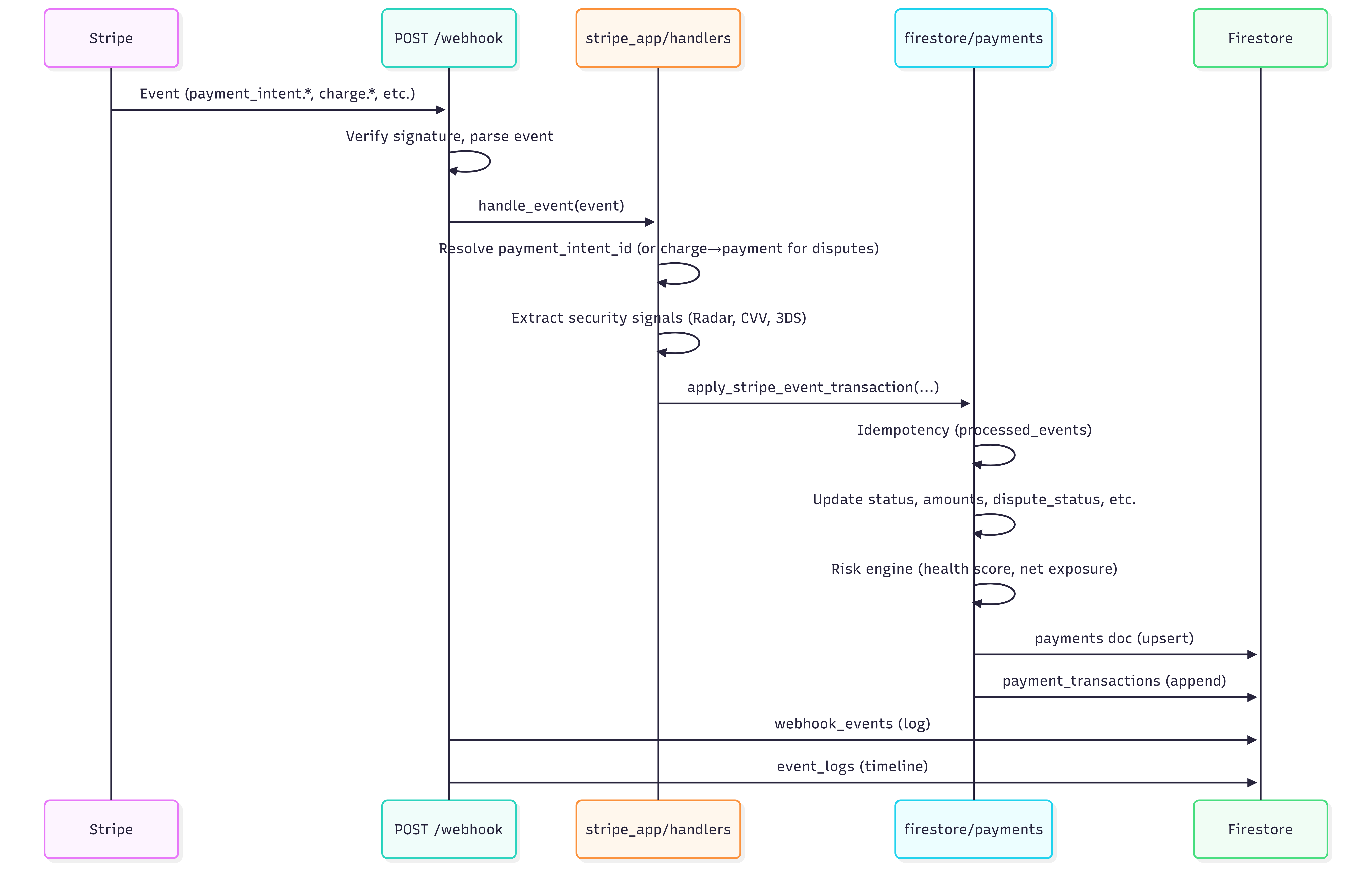
Stripe events are processed through a centralized endpoint.
Supported events include:
checkout.session.completedpayment_intent.succeededpayment_intent.amount_capturable_updatedcharge.refundedcharge.dispute.createdcharge.dispute.closed
The system ensures idempotent processing so events are never applied twice.
Stripe → Ledger event flow
Events from Stripe are received at the webhook endpoint and translated into ledger updates in Firestore.
Firestore Ledger Model
The platform maintains a financial ledger in Google Cloud Firestore.
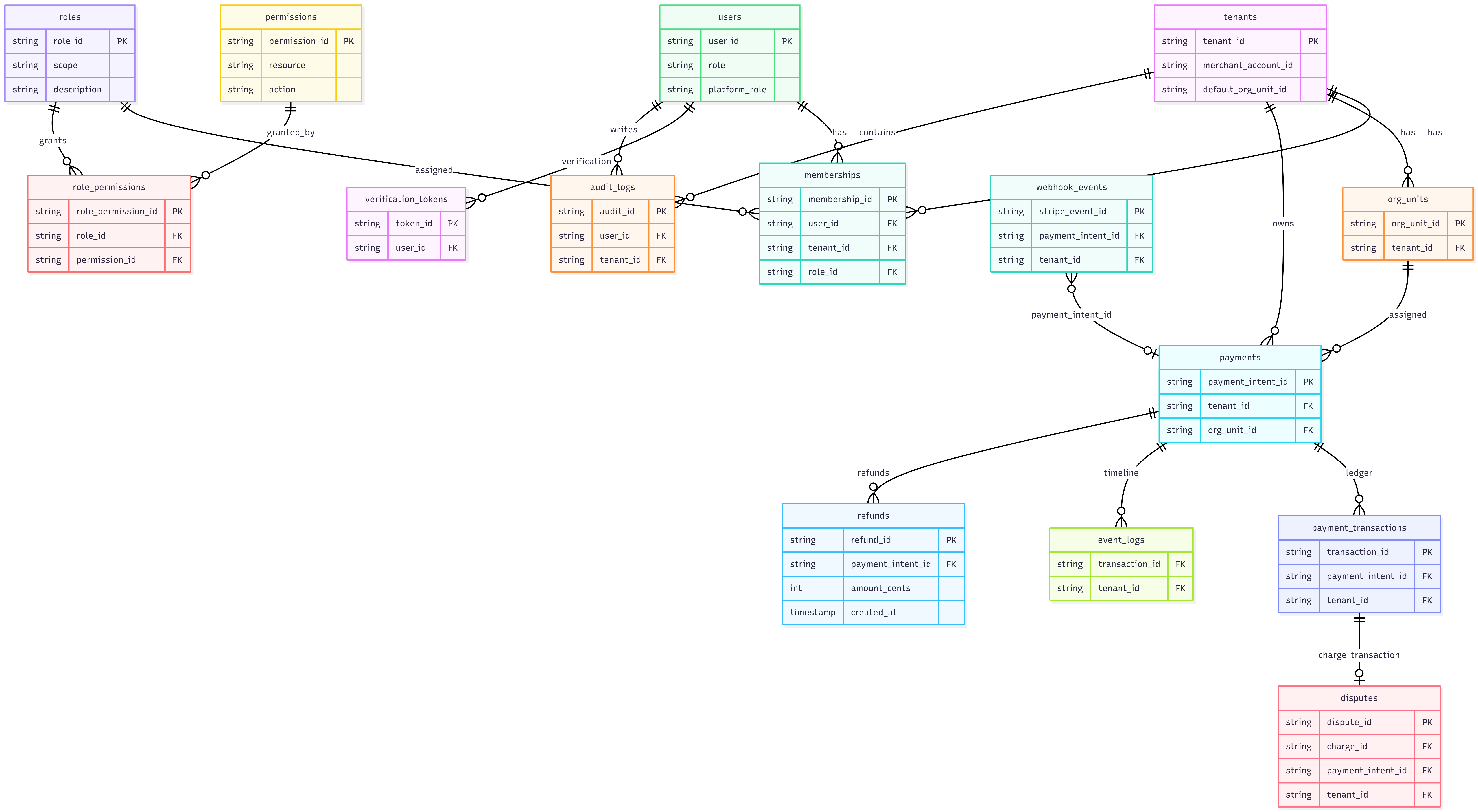
Core collections:
paymentspayment_transactionsevent_logswebhook_events
These collections provide a complete financial audit trail.
Authentication & Access
The platform uses authentication plus Role-Based Access Control (RBAC) to enforce tenant isolation and least-privilege access across the payment lifecycle.
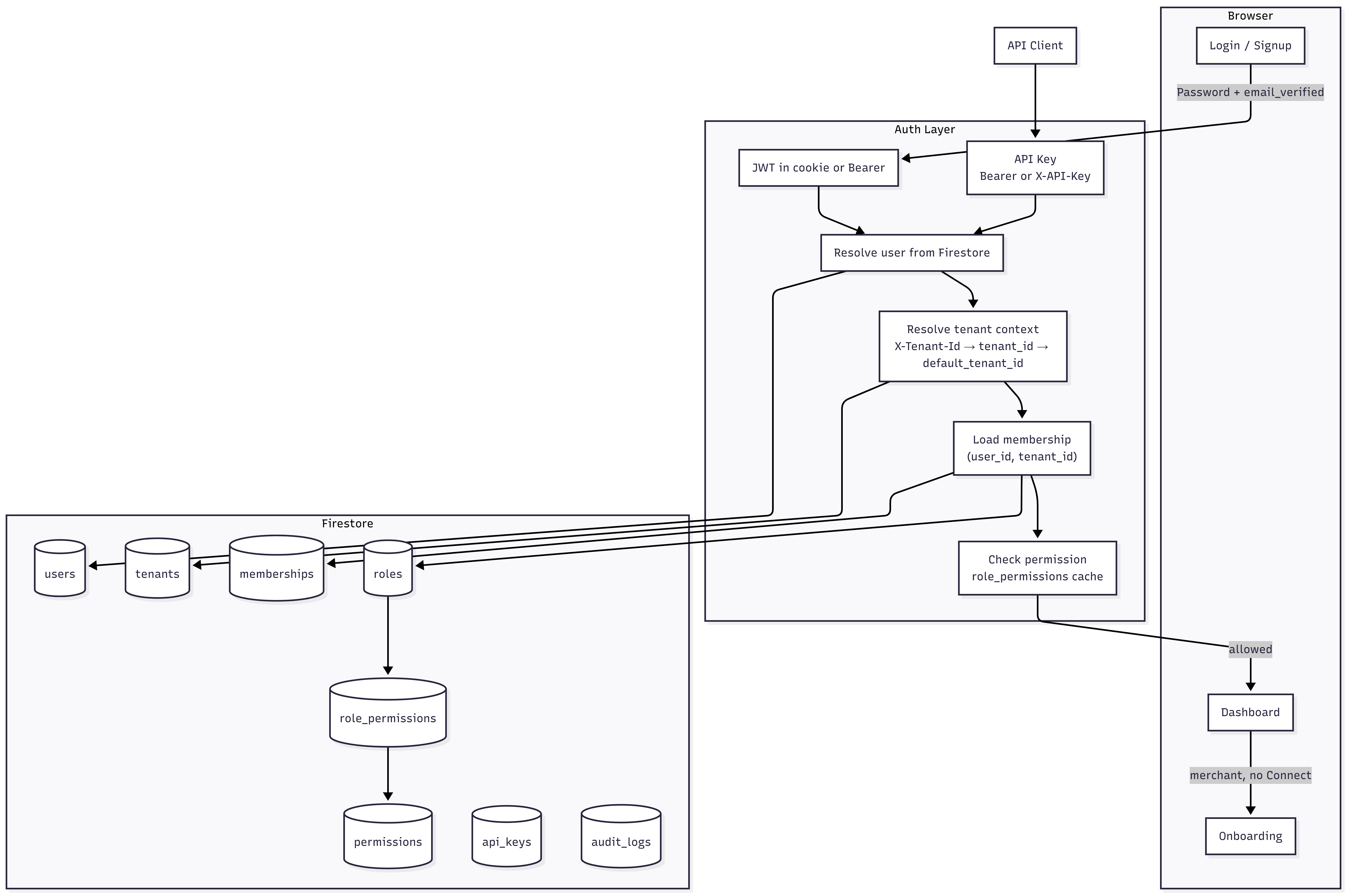
RBAC Model
- Tenant roles limit access to a single merchant tenant (e.g. merchant admin vs. merchant user).
- Platform roles allow cross-tenant visibility for administrators and operational teams.
- Permissions map to capabilities such as viewing payments, managing refunds/disputes, and accessing developer APIs/merchant dashboards.
Enforcement
- API authorization: each request is authorized using the caller identity (JWT/session) combined with role + tenant context.
-
Data isolation: Firestore access checks tenant ownership so ledger collections (for example
payments,payment_transactions,event_logs) cannot be read or modified outside the caller’s tenant scope. - Least privilege: roles only receive permissions needed for their UI and workflows (dashboard reads, orchestration actions, etc.).
In practice, a merchant’s Stripe account remains isolated within Stripe Connect, while your platform provides a consistent multi-tenant view through controlled access to the ledger and APIs.
Risk & Exposure Engine
The platform includes a merchant exposure analysis engine.
Metrics include:
- Net merchant exposure
- Refund impact
- Dispute impact
- Stripe Radar risk signals
Example health score:
health_score = net_exposure / original_amount